
Thinking about buying an electric vehicle in Perth? Before choosing your EV, it is worth checking whether your home is ready for convenient and safe charging.
Preparing your home does not necessarily mean installing a charger immediately. It means understanding your electrical capacity, switchboard condition, charging location, power supply and future energy needs before the vehicle arrives.
If you’re wondering how to prepare your home for an EV, a few simple checks can help you choose the right charging setup and avoid unexpected electrical work later.
The first step is deciding where you will normally charge your EV.
Common options include:
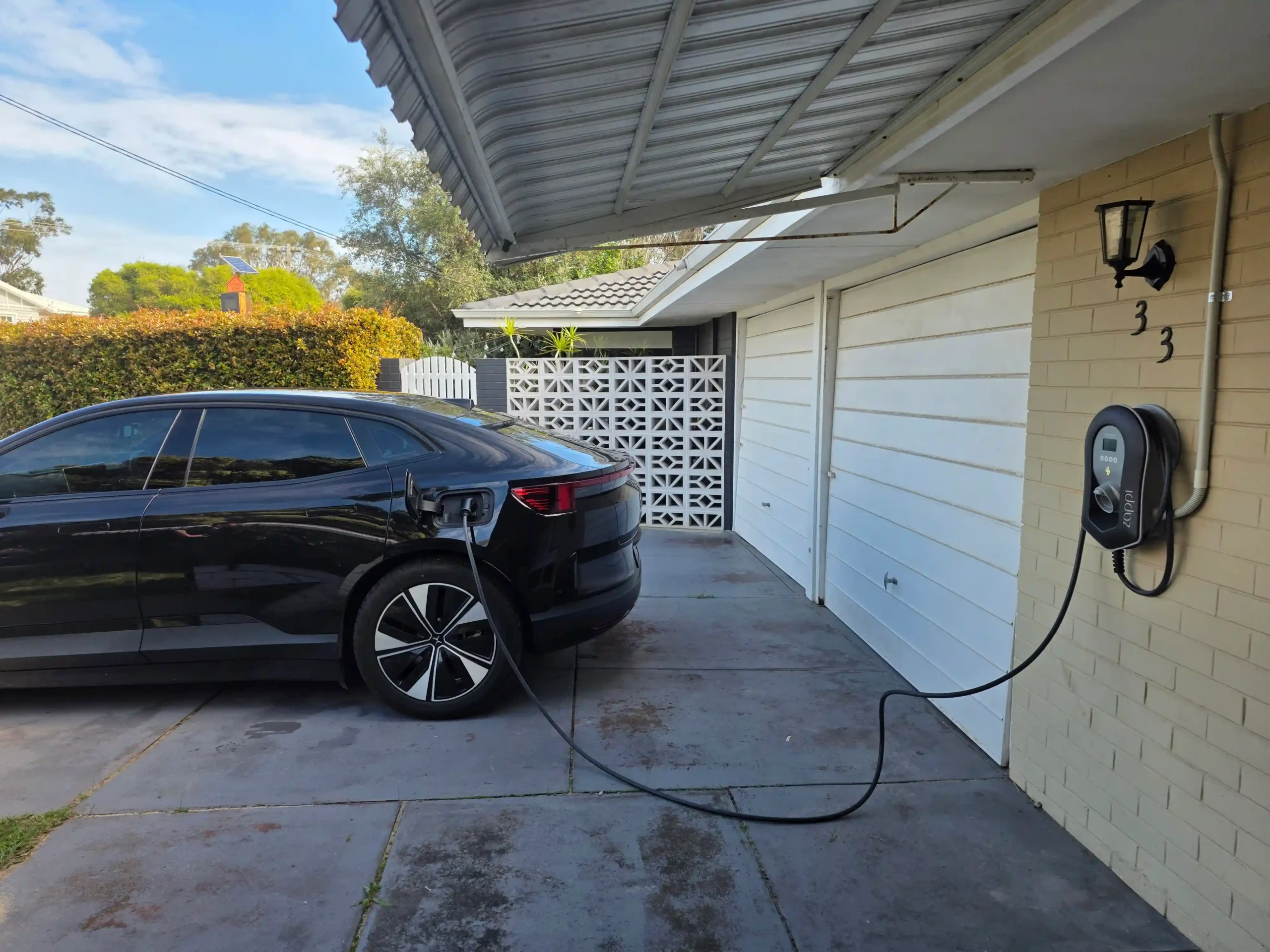
The parking location influences where an EV charger can be installed and how the cable can be routed back to your electrical system.
Ideally, the charger should be positioned so the cable can reach the vehicle comfortably without creating unnecessary trip hazards or relying on long extension leads.
If you’re renovating or building a garage or carport, planning the charging location early can also simplify future EV charger installation Perth requirements.
Your switchboard is one of the most important parts of your home’s EV charging setup.
An electrician can inspect whether your existing switchboard has:
Older Perth homes may still have ceramic fuses, limited circuit space or ageing switchboard components. This does not automatically mean the entire board needs replacing, but its condition and capacity should be checked before adding a dedicated EV charging circuit.
Checking your switchboard early can help identify potential electrical work before you commit to a particular charger.
Your property may have a single-phase or three-phase electrical supply, and this can influence your available charging options.
You do not automatically need three-phase power to charge an EV. The appropriate setup depends on the vehicle, charger, electrical capacity and how frequently you expect to charge.
Your electrician should also consider other significant household loads, such as:
The important consideration is the home’s overall electrical demand, rather than looking at the EV charger separately.
Some EV owners use a standard household power point for occasional charging. This can be suitable for certain situations, but a dedicated home EV charger can offer greater convenience for regular charging.
Your decision should consider:
For someone who drives daily, a dedicated charger can make overnight charging much more practical.
When you prepare your home for an EV, focus on your actual driving and charging habits rather than automatically choosing the highest-powered charger.
If your Perth home has rooftop solar, it is worth considering how your EV could fit into your existing energy system.
Depending on the solar system, charger and energy management technology, solar generation may be used to help charge your vehicle.
Smart EV chargers can provide features such as:
If you are considering solar and an EV at the same time, planning both systems together can help create a more efficient home energy setup.
A home battery can add another option for managing energy for your EV.
For example, depending on your system design, you may be able to use solar generation during the day, store excess energy and use that stored energy later.
However, the interaction between your solar inverter, battery, EV charger and household loads needs to be considered carefully.
If you already have battery storage or are planning one, tell your electrician before selecting your EV charger. This allows the proposed charging system to be assessed as part of your wider electrical infrastructure.
Your electrical requirements may change after buying your first EV.
You could eventually add:
Future-proofing does not mean installing equipment you do not need today. Instead, it means considering whether your current electrical infrastructure can accommodate realistic future changes.
A good electrical design should provide a practical solution for your current requirements while avoiding unnecessary upgrades.
There is no single EV charger that is ideal for every Perth homeowner.
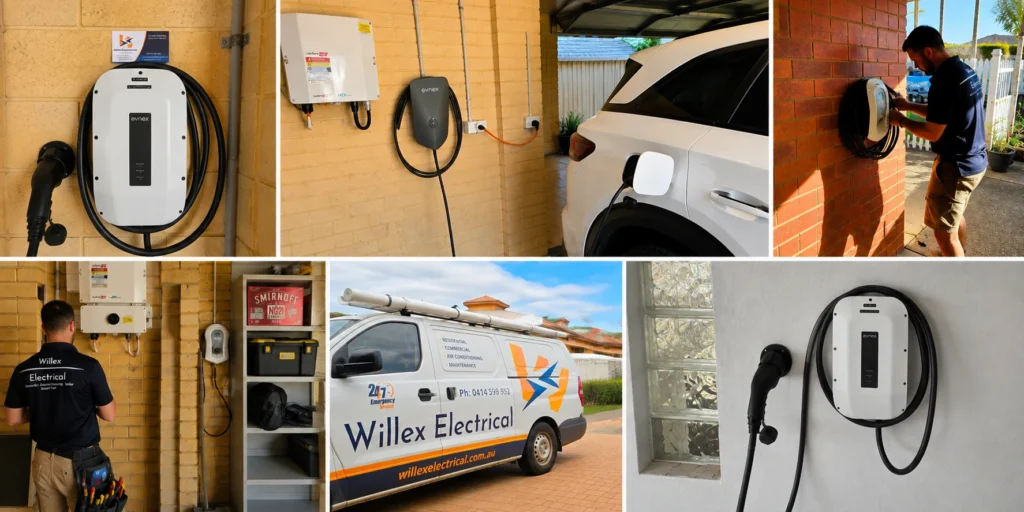
Willex Electrical installs popular charging solutions including the Tesla Wall Connector, Zappi and Evnex. Depending on the model, these chargers can offer features such as smart charging, app controls, energy monitoring and solar integration.
Your charger selection should take into account:
A charger should be selected based on how it will work with your home, not simply its maximum charging speed.
Before purchasing an electric vehicle, it can be useful to ask an electrician:
Getting these questions answered before the vehicle arrives can make the transition to EV ownership much easier.
Willex Electrical is a Perth-based electrical contractor holding WA Electrical Contractor Licence EC14820, with more than 25 years of electrical experience across the UK, New Zealand and Australia.
The team works across residential and commercial electrical projects, including EV charger installation, switchboard upgrades, solar and battery systems.
Willex Electrical is a member of Master Electricians and has experience working with renewable energy technologies and EV charging systems. This broader electrical experience allows the team to consider your charger as part of the home’s overall electrical infrastructure.
Whether you are considering a Tesla Wall Connector, Zappi or Evnex charger, Willex Electrical can assess your property and help determine the appropriate electrical requirements before installation.
The aim is to recommend a solution based on your home’s actual electrical capacity, condition and future requirements rather than assuming that every property needs the same setup.
Some EVs can be charged using suitable portable charging equipment connected to a standard power point. However, a dedicated EV charger can provide a more practical solution for regular home charging, particularly for drivers who travel frequently.
No. EV chargers can be installed in homes with single-phase or three-phase supplies, depending on the charger, vehicle and available electrical capacity. A licensed electrician can determine which option is appropriate for your property.
The best location depends on where you park your vehicle, the position of the switchboard, cable routing and the physical layout of your property. A garage, carport or suitable external wall may be appropriate depending on the installation.
Yes, depending on your solar generation and charging equipment. Smart EV charging systems can potentially help make better use of available solar energy, depending on the system configuration and your energy requirements.