
If you’re considering battery storage for your home, one of the most important questions is: how long does a solar battery last in Perth?
Most modern residential lithium-ion solar batteries are designed to provide around 10 years or more of service, but actual lifespan varies depending on battery chemistry, usage, charging cycles, operating temperature, installation conditions and the manufacturer’s warranty.
For Perth homeowners, temperature is an especially important consideration. A professionally designed and correctly installed battery system can help you get reliable performance throughout its expected service life.
A quality solar battery can typically last around 10 years or longer, depending on the product and how it is used. Battery capacity gradually decreases over time through a process called degradation.
The end of a warranty period does not necessarily mean the battery stops working. Instead, the battery may continue operating with reduced usable capacity.
Your battery’s expected lifespan should therefore be assessed using the manufacturer’s warranty, cycle-life specifications, usable capacity and operating conditions.
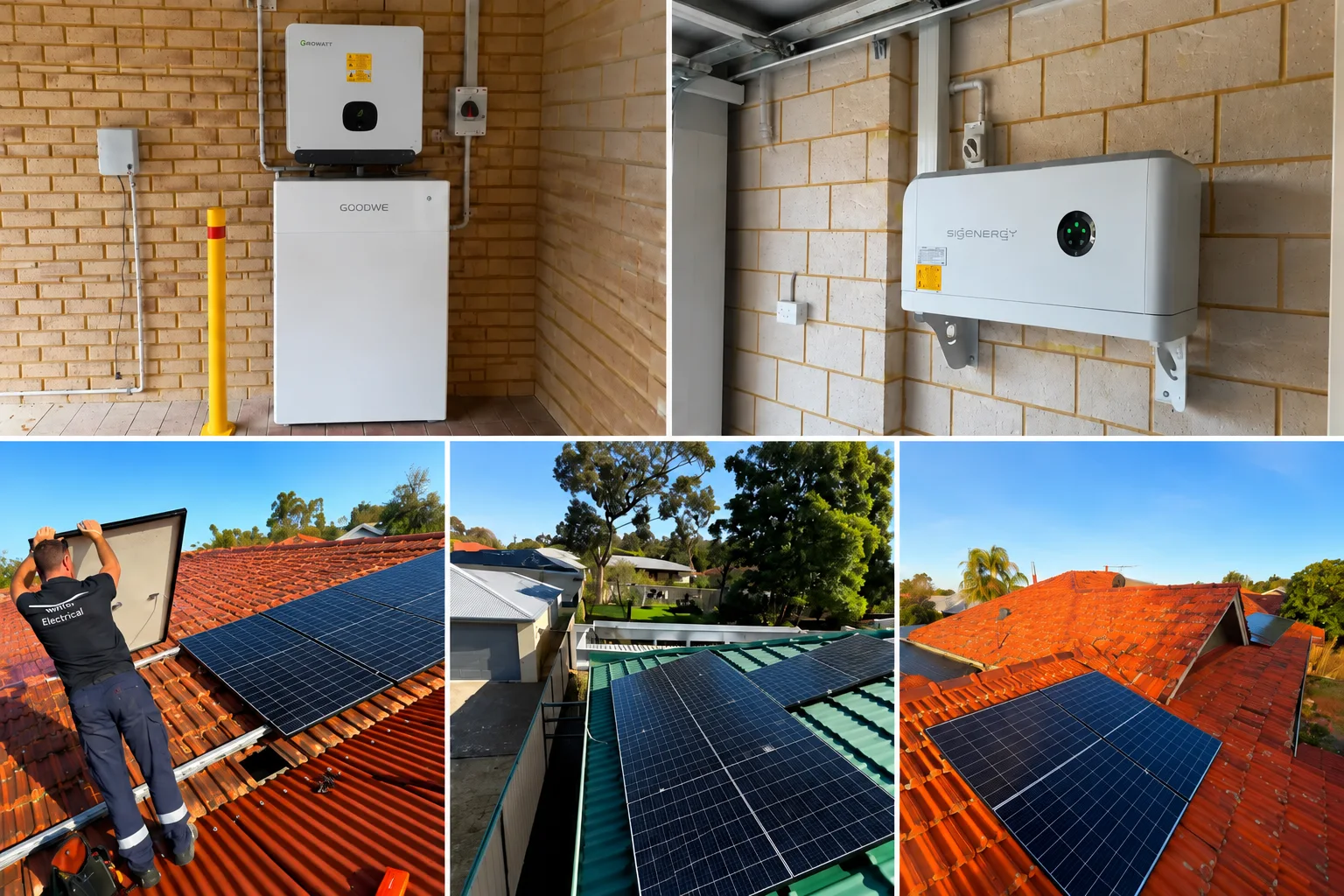
Several factors influence solar battery lifespan Perth homeowners can expect.
Perth experiences hot summers, making temperature management an important part of battery installation.
Excessive heat can accelerate battery degradation. For this reason, the battery should be installed in a suitable location that meets the manufacturer’s requirements for temperature, ventilation and environmental conditions.
Modern battery systems may include thermal management and monitoring features to help maintain appropriate operating conditions.
Every time a battery stores and releases energy, it undergoes charging and discharging activity. Over thousands of cycles, this gradually affects its storage capacity.
A battery designed for residential solar storage is built for regular cycling. However, the expected cycle life varies between products, so it is important to choose a battery that suits your household’s energy consumption.
Depth of discharge (DoD) describes how much of a battery’s stored energy is used before it is recharged.
Regularly operating a battery within the manufacturer’s recommended DoD range can help manage long-term battery wear. The battery management system (BMS) also plays an important role in monitoring and controlling battery operation.
Battery longevity isn’t only about the battery itself.
A qualified installer should assess your existing solar PV system, inverter compatibility, electrical supply, battery location and household energy consumption before installation.
Correct system sizing and professional commissioning can help ensure the battery operates as intended.
Excessive heat can contribute to faster battery degradation, which is why battery placement and temperature management matter in Perth.
However, temperature is only one factor. Battery chemistry, design, charging behaviour, cycle life, installation conditions and manufacturer specifications all influence performance.
Many modern residential systems use lithium iron phosphate (LFP or LiFePO4) technology, which is widely used for home energy storage.
Rather than choosing a battery based solely on its advertised lifespan, Perth homeowners should consider the complete system, including its warranty, usable capacity, efficiency, cycle life and installation requirements.
There isn’t one battery that is best for every Perth property.
Battery systems from brands such as Sigenergy, Sungrow, Fox ESS, GoodWe, iStore and Tesla Powerwall have different specifications, capacities, warranties and system configurations.
The right choice depends on factors such as:
A professional assessment can help determine which battery technology and capacity are appropriate for your home.
To help maximise your battery’s useful service life:
Good installation, appropriate system design and sensible energy management can all contribute to better long-term performance and solar battery lifespan Perth homeowners can achieve.
A solar battery does not necessarily need to be replaced simply because it has reached the end of its warranty.
Replacement may become appropriate when the battery has experienced significant capacity loss, develops persistent faults or no longer provides enough usable energy for your household.
Common signs that a battery may need assessment include:
Before replacing the system, a professional assessment can determine whether the battery should be replaced, repaired where permitted, or whether additional storage would be more suitable.
There is no fixed solar battery replacement cost in Perth.
Pricing can depend on:
If your existing solar system is several years old, replacement can also be an opportunity to reassess your energy consumption and determine whether a larger or newer battery system would better suit your household.
For many Perth households, a solar battery can store excess electricity generated by rooftop solar during the day and make that energy available when solar production decreases.
This can be particularly useful for households that consume more electricity during the evening.
However, the financial value of a battery depends on your electricity usage, solar generation, energy tariff, battery capacity and how effectively you use the stored energy.
The important question isn’t simply how long a solar battery lasts. It’s whether the battery is correctly sized and configured for your home’s energy needs.
Choosing a battery involves more than comparing prices and storage capacity. Willex Electrical can assess your existing solar system, electrical requirements, household energy consumption and future plans to help identify a suitable home battery storage Perth solution.
Willex Electrical brings extensive electrical experience to residential projects and provides practical advice based on the property and the system requirements rather than using a one-size-fits-all approach.
If you’re considering solar battery installation or replacing an ageing battery, a professional assessment can help you understand your options before making an investment.
Most modern residential solar batteries are designed to provide around 10 years or more of service, although actual lifespan depends on the battery, usage, temperature and installation conditions.
Excessive heat can accelerate battery degradation. Correct installation location, ventilation and temperature management are important, particularly during Perth’s hot summers.
Reduced capacity, shorter backup times, recurring faults and significant performance changes can indicate that a battery requires professional assessment.
Yes. A warranty period is not necessarily the same as the point at which a battery stops functioning. A battery may continue operating after its warranty expires, although its usable capacity may have decreased.