If you have rooftop solar in Perth, you may assume your home will continue running when the electricity grid goes down. However, a standard grid-connected solar system usually cannot power your home during a blackout.
When the grid loses power, the solar inverter normally shuts down automatically. This safety feature, known as anti-islanding, prevents electricity from being sent into the network while electrical workers may be carrying out repairs.
So, can solar panels power your home during a blackout? The answer depends on your system. Solar panels alone generally cannot provide blackout protection, while a suitably designed solar and battery backup system can keep selected or, in some cases, whole-home loads operating.
For Perth homeowners considering solar batteries, understanding how backup power works can help you choose the right system from the beginning.
For most standard grid-connected solar systems, no.
Even if your solar panels are producing electricity when the blackout occurs, your inverter is designed to detect the loss of grid power and disconnect.
This is an important electrical safety requirement. Without this protection, a solar system could potentially continue sending electricity into a section of the network that workers believe is de-energised.
In simple terms:
Normal grid operation → Solar system operates
Grid outage → Inverter detects outage → Solar system disconnects
Therefore, having rooftop solar does not automatically mean your home has backup power.
Anti-islanding is a safety function incorporated into grid-connected solar inverters.
When the electricity grid fails, the inverter detects the abnormal grid condition and stops supplying power. This helps protect network workers and the electrical network during an outage.
A backup-capable system is designed differently. It can safely disconnect the property from the grid and create a controlled local electricity supply.
This is commonly known as islanding or an islandable solar and battery system.
If blackout protection is important to you, it needs to be specifically included in the system design rather than assumed.
Yes, a suitably configured battery system can provide backup electricity during an outage.
However, not every battery installation automatically provides blackout protection.
Depending on the system design, a battery may supply:
The Australian Government explains that appropriately configured battery systems can provide backup during outages, while islandable solar and battery systems can disconnect from the grid and continue supplying a property.
This means homeowners should tell their installer if backup power is one of their requirements before choosing a battery or inverter.
Your backup system can be designed around the appliances you consider most important.
Essential loads may include:
A larger system may be capable of supporting additional household appliances.
However, high-demand equipment such as air conditioning, electric hot water and induction cooking can consume significant amounts of electricity. Running these appliances continuously will reduce how long the battery can supply the home.
This is why battery capacity should be matched to your household’s actual backup requirements, rather than simply choosing a battery based on your solar panel capacity.
There is no fixed backup time for every home.
Battery runtime depends on factors including:
For example, a household using a battery for refrigeration, lighting and internet equipment will generally consume much less energy than one operating multiple air conditioners and electric hot water.
During a prolonged outage, reducing unnecessary electricity consumption can help preserve stored energy.
Potentially, yes — but only when the solar and battery system is designed to operate independently from the grid.
An appropriately configured islandable solar and battery system can isolate the property from the electricity network while allowing solar generation to continue under suitable conditions.
When sunlight is available, solar energy may help supply household loads and recharge the battery.
A conventional grid-connected solar system should not be assumed to have this capability simply because a battery has been added.
If continued solar generation during a blackout is important to you, make this requirement clear when planning the system.
In many cases, yes.
If you already have rooftop solar, adding battery storage can help you use more of your own solar energy and potentially provide backup power.
Before adding a battery, an electrician should assess:
Some existing solar systems may require additional equipment or changes before battery storage and backup functions can be added.
This is why a professional assessment is important before selecting a battery.
Perth homeowners installing or upgrading solar and battery systems should also consider current Western Australian connection requirements.
From 1 May 2026, new and upgraded solar and battery systems connected to the South West Interconnected System (SWIS) are subject to updated requirements relating to inverter capacity, remote disconnection/reconnection or export limiting, and applicable inverter standards.
These requirements relate to grid connection and system operation. They do not mean that a solar system automatically provides blackout backup.
If you are upgrading an existing solar system or adding a battery, your installer should assess the existing equipment and ensure the proposed system meets the applicable WA requirements.
If keeping your home powered during a blackout is important, ask your installer:
These questions help ensure the system is designed around your actual energy and backup requirements.
Willex Electrical is a Perth-based electrical contractor holding WA Electrical Contractor Licence EC14820, with more than 25 years of electrical experience across the UK, New Zealand and Australia.
Willex works across residential and commercial electrical projects, including solar installation, battery storage, switchboard upgrades and electrical infrastructure.
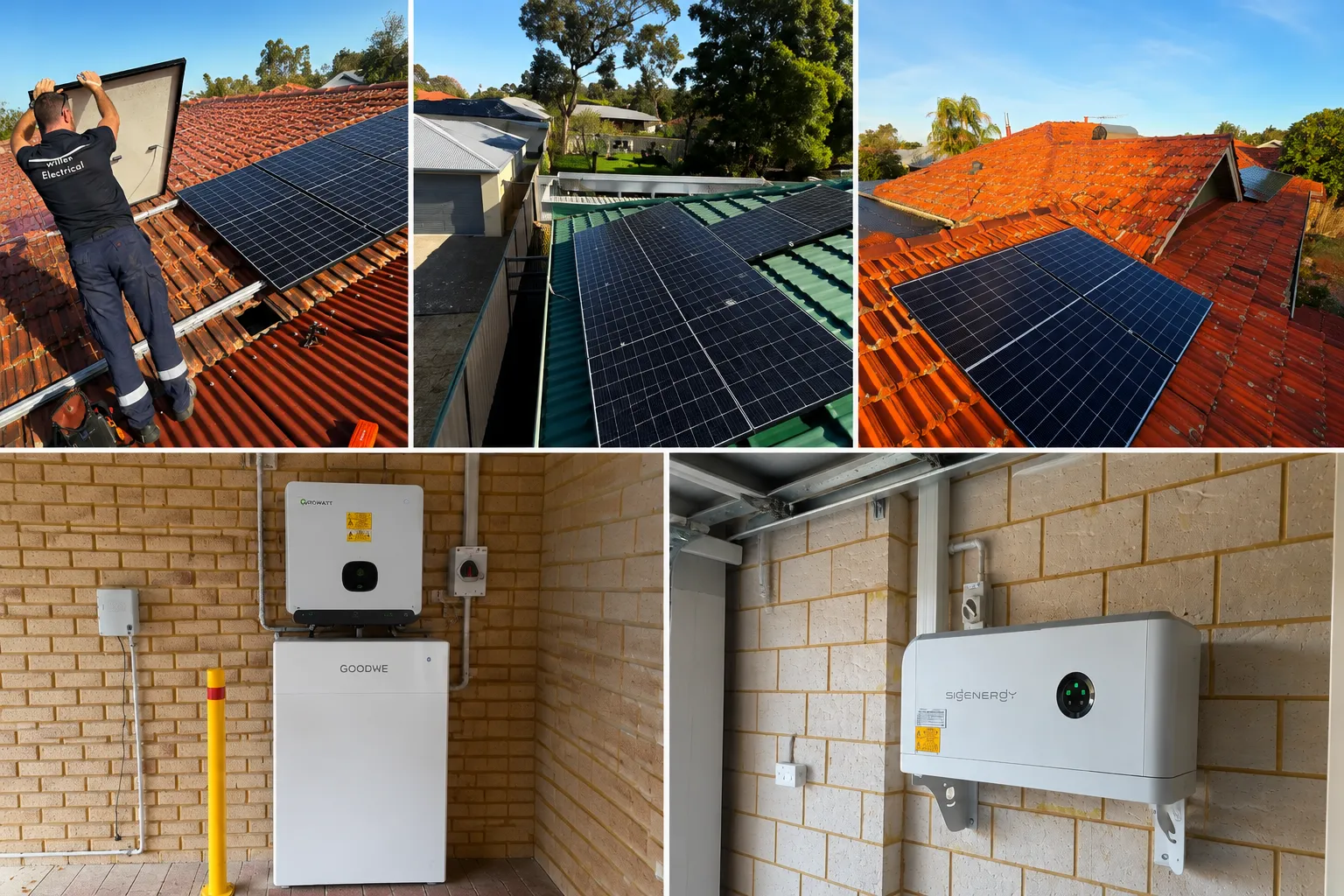
The team also has experience with battery technologies including Sigenergy, Fox ESS, Sungrow, iStore and GoodWe.
This broader electrical experience allows Willex to assess the complete system rather than treating the battery as a standalone product. Your solar panels, inverter, battery, switchboard and household loads all need to work together for a reliable backup solution.
If your goal is to increase solar self-consumption, reduce grid dependence or maintain essential power during an outage, Willex Electrical can assess your property and help determine an appropriate solution.
So, can solar panels power your home during a blackout?
A standard grid-connected solar system generally cannot power your home during a grid outage on its own. A suitably designed battery backup system can provide electricity during an outage, while an islandable solar and battery system may allow solar generation to continue supporting the property when the grid is unavailable.
The important point is that blackout protection must be designed into the system. Simply installing solar panels or adding a battery does not automatically provide backup power.
A battery is generally the practical option for storing energy that can be used during an outage. The system must also have the appropriate backup functionality and configuration.
Potentially, but this depends on the battery, inverter, backup equipment, switchboard and household electricity demand. Some systems are designed to supply only selected essential circuits.
Often, yes. However, the existing solar inverter, system configuration, switchboard, battery compatibility and applicable WA requirements should be assessed before installation.